
DUPR rating explained
DUPR, explained without the jargon
What your Dynamic Universal Pickleball Rating actually measures, how it differs from the old 2.5–5.0 levels, and the practical ways to raise it.
What DUPR is
DUPR is the rating system most competitive pickleball now runs on. It replaces vague self-ratings with one number, earned on the court, that means the same thing everywhere.
How DUPR works
A single number across the sport
DUPR (Dynamic Universal Pickleball Rating) gives you one rating that travels with you between clubs, leagues, and tournaments — instead of a self-rating that means something different at every venue.
Earned from real matches
Your rating moves based on the scores of games you actually play against rated opponents. It reflects results, not how you describe yourself on a sign-up form.
A wider, more precise scale
DUPR runs roughly from 2.0 to 8.0 and is reported to two decimals, so a 3.42 and a 3.78 are clearly distinct — far more granular than being lumped into "3.5".
Updated continuously
Because it recalculates as new results come in, DUPR keeps pace with your game. A good stretch nudges it up; a rough patch nudges it down. It is meant to reflect where you are now.
DUPR vs. the old 2.5–5.0 levels
The same player, described two ways. Here is how a DUPR rating differs from the traditional self-rated levels.
| DUPR | Self-rated levels | |
|---|---|---|
| Scale | ~2.0–8.0, two decimals | 2.5–5.0 in half-points |
| Where it comes from | Real match results | Self-assessment or club |
| Consistent between venues | Yes | Rarely |
| Updates over time | Continuously | Only if reassessed |
| Counts wins and losses | Both, weighted | Not tracked |
How to actually raise it
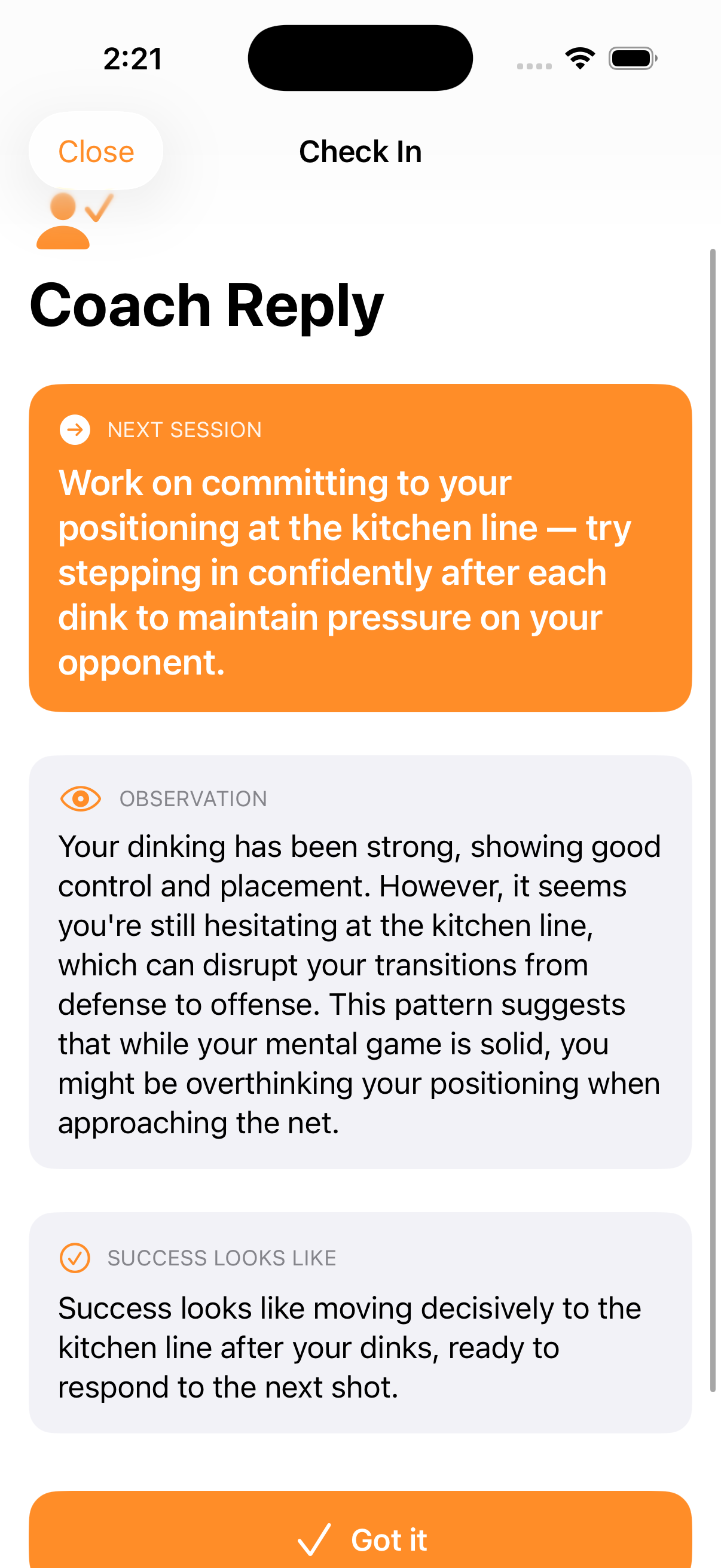
A rating goes up when your results improve — and results improve when you fix the right weakness. PostPoint does not track or estimate your DUPR. It is a coach: after you play, a 20-second check-in tells it what stood out, and it replies with the one shot to work on next — the kind of focused work that, over time, is what actually moves a rating.
Frequently asked questions
- What does DUPR stand for?
- DUPR stands for Dynamic Universal Pickleball Rating. "Dynamic" because it updates as you play, and "universal" because it uses one scale for everyone — men and women, singles and doubles, rec and pro — so ratings are comparable across the whole sport.
- How is DUPR different from the old 2.5–5.0 levels?
- The older 2.5–5.0 levels are usually self-assessed or assigned by a club, with broad half-point bands and no consistent meaning between venues. DUPR is calculated from your actual match results on a wider scale (about 2.0–8.0) and reported to two decimals, so it is both more granular and harder to game.
- Will I lose rating if I lose a match?
- Not necessarily. DUPR factors in who you played and how close the game was, not just the win or loss. Playing a strong opponent tight can hold or even raise your rating, while a narrow win over a much weaker team may move it very little. Consistently playing — and competing well — matters more than any single result.
- What is the fastest way to raise my DUPR?
- Play plenty of rated games against opponents at or slightly above your level, and make those games count by fixing the shot that loses you the most points — usually the third shot, the return, or kitchen-line consistency. Targeted practice between matches is what turns reps into a higher rating. A coach like PostPoint helps you spot which shot that is and stay on it, but it does not track or estimate your DUPR number itself.
Keep exploring
Pickleball Coaching App
What PostPoint is, how the check-in loop works, and how it compares to lessons and YouTube.
Pickleball Training App
A coach, not a training-plan generator — how the focus-and-check-in loop trains your game.
Pickleball Drills App
Why PostPoint isn’t a drill library — it tells you the one thing to focus on next.
Pickleball Strategy Guide
Positioning, stacking, shot selection, and the doubles tactics that win close games.
Best Pickleball Apps
An honest 2026 overview of pickleball apps for coaching, drills, rating, and finding games.
Your next session starts with a focus
PostPoint is on iOS, free to start, and works without an account. Set your first focus, play, and check in after — your coach takes it from there.